Why Physician-Led Oversight Matters in Clinical Trial Execution
Updated: Aug 4
Intended audience: Sponsors, CROs, site-selection teams, clinical operations leaders, feasibility teams (primary); investigators and referring physicians (secondary) Primary purpose: Establish physician-led oversight as a concrete operational differentiator in site selection, and position Dr. Rene Veytia and Renova Clinical Trials as a credible example of what that oversight looks like in practice
Primary keyword theme: Physician-led clinical research site / Principal Investigator Tijuana
When a sponsor or CRO evaluates a potential research site, "physician-led" is one of the most frequently used — and most loosely defined — terms in site-selection materials. In practice, it can mean anything from a physician's name on a regulatory document to a physician who is present for every study visit, reviews every adverse event in real time, and makes protocol-specific decisions as they arise.
The difference matters. Physician-led oversight, correctly implemented, is not a credential — it is an operational structure that affects data quality, participant safety, protocol compliance, and how quickly a site can respond when something unexpected happens.
What Physician-Led Oversight Actually Means
Under ICH E6(R2), the Principal Investigator is the individual responsible for the conduct of the trial at the site — not only for signing required documents, but for ensuring the study is conducted according to the protocol, applicable regulations, and Good Clinical Practice standards throughout its duration. FDA regulations similarly place responsibility on the sponsor to select investigators who are qualified by training and experience, and place responsibility on the investigator to personally conduct or directly supervise the study once selected.
In a well-run site, this translates into specific, observable practices:
Direct clinical review, not just administrative sign-off, of participant eligibility, adverse events, and protocol deviations
Real-time decision-making when a participant's clinical status changes or a protocol scenario isn't explicitly covered by the plan
Delegation with accountability — coordinators and sub-investigators carry out day-to-day tasks, but the PI remains the point of clinical judgment
Continuity across the study lifecycle, from feasibility assessment and protocol review at startup through data review and closeout
A site can have excellent facilities and still fall short here if physician involvement is nominal rather than active. Conversely, a smaller site with genuinely engaged physician leadership can outperform a larger one on the things sponsors actually care about: clean data, fast query resolution, and few protocol deviations.
Why This Matters More for High-Touch and Procedure-Oriented Studies
The value of physician-led oversight scales with study complexity. For a simple, low-frequency-visit protocol, administrative oversight may be adequate. For studies involving frequent visits, in-clinic procedures, investigational product administration, or close safety monitoring, the calculus changes.
In procedure-oriented and high-touch protocols, clinical judgment is required more often and with less advance notice — a borderline eligibility question during screening, an unexpected finding during a procedure visit, a safety signal that needs same-day interpretation. Sites where a physician is genuinely embedded in day-to-day execution are structurally better positioned to handle these moments without delay, sponsor escalation, or protocol drift.
This is also where physician-led sites tend to differentiate themselves on data quality. Clinical judgment applied consistently at the point of care — rather than after the fact — tends to produce fewer downstream corrections, fewer queries, and more defensible source documentation.
What This Looks Like at Renova Clinical Trials
Renova Clinical Trials is a physician-led clinical research site in Tijuana, Baja California, operating within the San Diego–Tijuana clinical research corridor. The site is built around a multi-specialty ambulatory surgical center with seven exam rooms, one operating room, on-site specimen processing, temperature-controlled investigational product storage, dedicated IP preparation and dispensing, a monitoring room for sponsor and CRO visits, and a recovery bay — supporting both routine outpatient visits and procedure-oriented protocols.
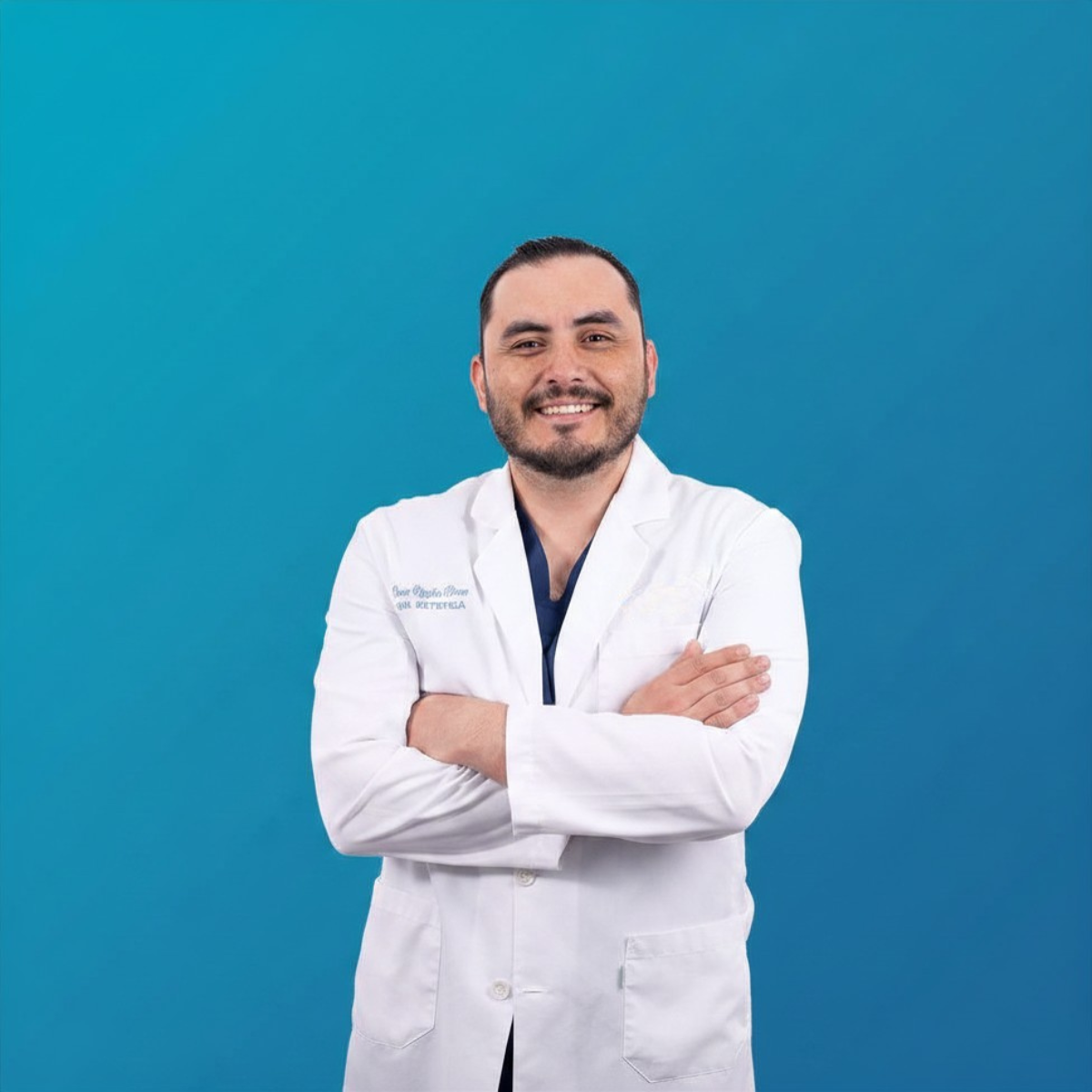
Dr. Rene Veytia serves as Principal Investigator and CEO. He brings more than 15 years of medical leadership and more than 8 years of specialized experience in pharmaceutical and biotech clinical development, including clinical trial operations in GI and rare disease research, and clinical development plan work with sponsors. He holds GCP (ICH E6) and IATA certifications for clinical trial materials handling, along with Advanced Cardiac Life Support and Neonatal Resuscitation credentials. He has also held Medical Science Liaison and Medical Affairs Manager roles across Mexico and Latin America, with additional experience in pharmacovigilance — including risk management and periodic safety reporting — and in establishing Medical Affairs SOPs and inspection readiness.
That clinical leadership extends to the surgical center itself, where Dr. Veytia's oversight has supported more than 500 procedures annually at a complication rate below 0.5% — a track record that reflects the same standard of direct, hands-on medical accountability the site applies to research conduct.
For sponsors, the practical implication is a site where physician oversight isn't a title on a delegation log — it is present in the exam room, the procedure suite, and the day-to-day judgment calls that determine whether a study runs smoothly or generates avoidable findings.
What Sponsors Should Ask When Evaluating Oversight
Site-selection teams evaluating any potential site — not only Renova — can use a few concrete questions to distinguish nominal from genuine physician-led oversight:
Is the Principal Investigator physically present for study visits, or primarily an administrative signatory?
How are adverse events and protocol deviations reviewed — by the PI directly, or escalated after the fact?
What is the PI's own clinical and procedural background, independent of research experience?
How does the site handle a clinical judgment call that falls outside explicit protocol instructions?
What is the relationship between the PI and the coordinators or sub-investigators handling daily execution?
These questions tend to surface the real answer faster than a site's marketing language does.
Conclusion
"Physician-led" should describe an operational reality, not a phrase on a website. For sponsors and CROs, the sites that consistently perform well on data quality and safety are the ones where a qualified physician is genuinely embedded in daily execution — reviewing findings, making judgment calls, and remaining accountable from feasibility through closeout. That standard is the foundation Renova Clinical Trials is built on, under Dr. Rene Veytia's direct clinical leadership.
Author: Renova Clinical Trials Clinical Team


Comments